


中道
Middle Tao
觀妄念安當下煩惱,秉中道立世間本心,入世即修行。
See through the wandering thought, and this moment’s trouble settles. Hold to the Middle Tao, and the original heart stands in the world. To enter the world is itself the practice.
— Middle Tao, I: The Way of Cultivating the Heart
知命 · 測勢
Read yourself and the world through Chinese metaphysics
Just ask. Master Libo takes it from there.
 Life ReadingKnow yourself, see your pathA chart is not a verdict. It is the script you have been performing without ever having read it.To know a fate is never to submit to it. You look so that the next time you reach the same threshold, you can walk it differently.
 Trend DivinationAsk, foresee, act wiselyA matter hangs unsettled and you can neither move nor let go — usually it is not the matter that is hard; the hour has not come.What is read is not a fixed fate but the air of this moment. See whether to move or to hold, and next time you will know it for yourself.
師承 · 中道
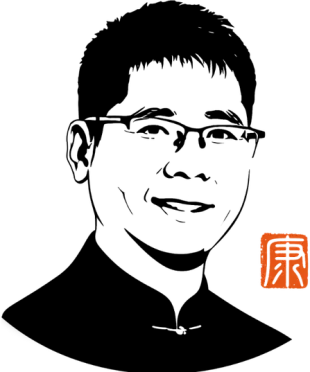
Master Kang Libo
Founded Mingyi Sidao in 2015, devoted to carrying Chinese tradition into present-day practice.
- Founder of the Middle Tao system
- Founder and Director, Mingyi Sidao Institute of Traditional Culture
- Twenty-fourth-generation inheritor of Jiang-school Da Xuankong Feng Shui
- Vice Chair, Yi Studies Education Committee, International Federation of Yi Studies
- Standing Council Member, China Zhouyi Association
- Named master of contemporary Chinese Yi studies and feng shui
Master Kang Libo would walk the road of the Middle Tao with you
Xuantian Mode · read from many angles
Yi studies is not one discipline. Each looks from its own angle: Bazi reads endowment, Qimen reads time and place, Da Liuren reads which way things are moving, Liuyao reads whether it comes off. Most practitioners command one of them, so on a single matter it is hard to consult several at once, and harder still to reconcile what they say. Xuantian takes the one thing you asked and casts it across several systems and several dimensions at once. Each reads independently, and the readings are drawn together into one report that holds every angle.
Chinese MetaphysicsImperial arts, professional charts
 Mingyi BaZiSee the pattern of destiny
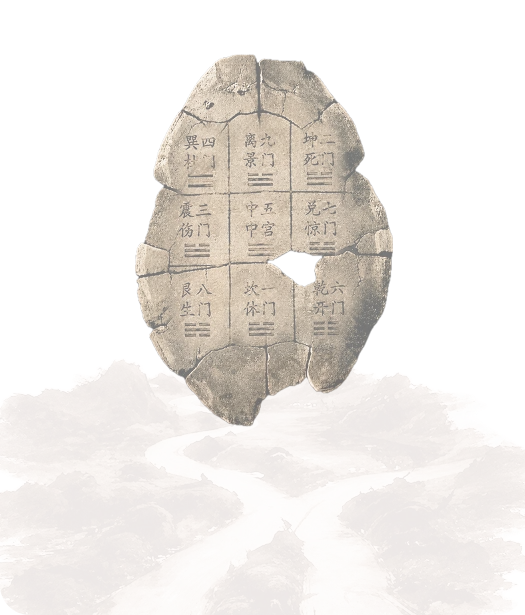 Zhongdao QimenForecast fortune & action
 Ziwei DoushuDestiny by the stars
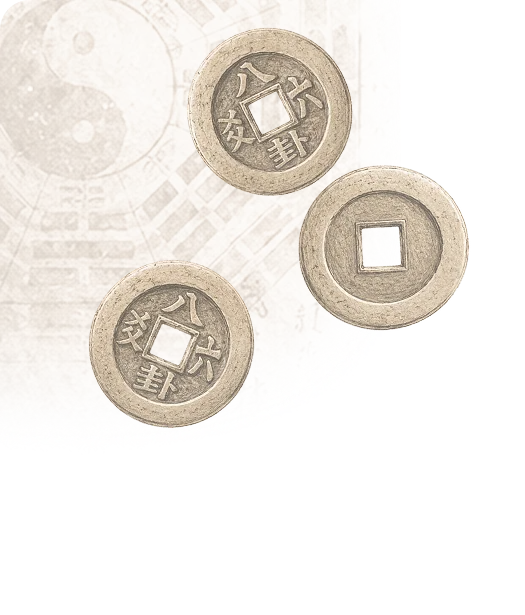 Liuyao NajiaCast coins, read omens
 Sanyuan LiurenFortune & its timing
 Meihua YishuDivine by signs
 Xuan Jinkou JueOne cast, many verdicts
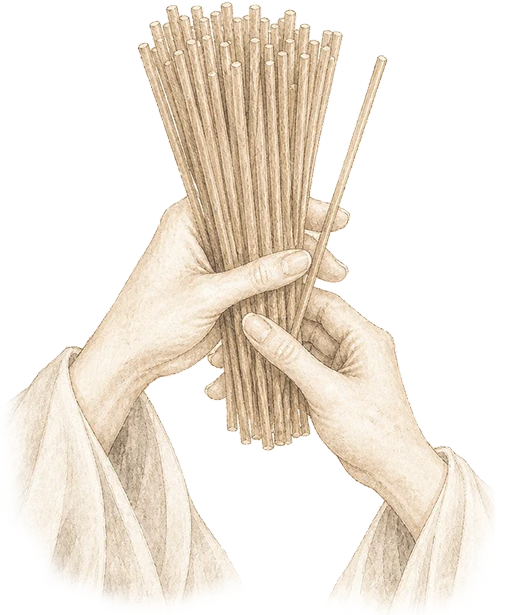 Dayan Yarrow DivinationGreat Expansion, eighteen changes
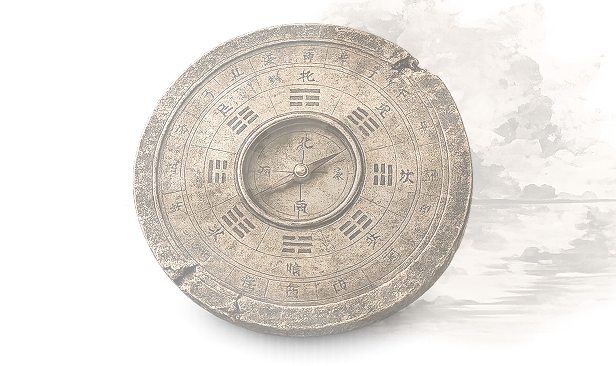 Xuanzhen Feng ShuiAuspicious layout analysis
-
Compatibility
Love & affinity trends
Partners, spouses, business partners, a parent and a child: any bond between two people can be read side by side.Eight charts each look at one side of it, and Master Kang draws them into a single report: where you meet easily, where you tend to rub, and how to get along better from here. -
Libo Date Pick
Choose lucky days
A wedding, an opening, a move, breaking ground, a contract, a journey: choosing the day before a big step is an old custom, and it steadies the heart.To see which days this month suit you, a monthly reading is enough. For something as large as a wedding, the day is chosen carefully from the person’s own birth chart. -
Birth hour estimation
Milestones reveal your hour
Without the hour of birth, a chart is missing a pillar, and much of it can only be read in outline.Answer a few things you remember, such as the year you married, your place among siblings, the age you started school. Bazi, Qimen, Ziwei and Liuren are checked against each other to find the hour that fits you.
See what others have to say
The chart is computed, not invented — that is what made me keep reading. The first answer did not lead with fortune; it named the thing I had been stuck on for years.
Chen JiamingSingapore · Architect
I asked at three in the morning. What came back was not comfort — it was a note that changed what I actually did the next day.
Misaki SatoJapan · Magazine editor
I am an engineer and I did not believe in any of this. But the same birth data gives exactly the same chart every time, and every reading ties back to it rather than to vague talk about personality. That won me over.
Daniel R.United States · Software engineer
We used date selection for the clinic renovation. Not for luck — for a sense of footing. Everything simply fell into place more easily.
Lim Boon PingMalaysia · TCM practitioner
It never says "this is your fate." It says "this stretch tends to go a certain way, and here is how you might walk it." That matches how I work, so I pass it on to my clients.
Elena M.Spain · Counsellor
I ran Xuantian before going into a partnership. Where the charts disagreed turned out to be exactly where the trouble later showed up.
Wang QianChina · Founder
Frequently asked questions
What is the Middle Tao?
Master Kang Libo defines it in a single sentence: “If you are on the path of cultivation, you are in the Middle Tao.” Cultivation is the Middle Tao and the Middle Tao is cultivation, with no further condition in between.
It is also called the Way of the Mean. Everyone has a right road of their own, not higher or lower, not larger or smaller than it should be, suited to their nature, circumstances and heart. To find it and keep walking it steadily is the Middle Tao.
It draws on Confucian, Buddhist and Daoist thought, holds with Wang Yangming that everything turns on the heart, and has no quarrel with Western psychology. No incense or chanting is needed; any small matter of daily life, met with a heart willing to look at itself, is already the path.
How is reading a life different from divining a matter?
A life is the pattern a person carries from the moment of birth: one chart each, kept for good. Bazi and Ziwei Doushu belong here, reading what kind of person you are and where the rises and falls of a life come. That is Life Reading.
A matter is the one thing hanging in front of you. No birth details are needed; the chart is cast for that matter alone, either from the moment you ask or from a hexagram you throw. Qimen, Da Liuren, Jinkou Jue, Meihua, Liuyao and yarrow divination belong here, answering whether to move or hold, here and now. That is Trend Divination. “What am I suited to in this life” is a question for the life; “will this deal come off” is one for the matter.
What is Xuantian Mode?
One system sees a question from one side; Xuantian Mode puts the same question to several at once. Once it is on, a number of Shenlong agents are summoned, each keeping to a single chart: natal charts from Bazi, Ziwei, Qimen and Da Liuren; timing charts from Qimen, Da Liuren, Liuyao, Meihua and Jinkou Jue; cast hexagrams from Liuyao and yarrow divination. Eleven charts in all, to tick as you choose.
Each chart is judged on its own, none reading over another’s shoulder; then Master Libo draws them into one in-depth report, kept in your Xuantian records and easy to share. Where the systems agree you can rest easy; where they differ is exactly where to take more care.
How does BaZi differ from Zi Wei Dou Shu?
Both begin from the moment of birth but proceed differently. BaZi turns the time itself into stems and branches and reads the interaction of the five phases; it is strong on temperament and on the rhythm of the decade luck. Zi Wei Dou Shu places over a hundred stars across twelve palaces and is strong on specifics — career, marriage, wealth, one palace at a time.
They also count time differently. BaZi runs on the solar-term calendar, where the year turns at Start of Spring; Zi Wei runs on the lunar calendar, where it turns at the first new moon. The same birth moment can fall in different months on the two systems.
How a BaZi chart is castZi Wei chartingStars and palacesAI Bazi
How do Qimen Dunjia and Liuyao differ?
Qimen Dunjia is the art of emperors, used in the old accounts to deploy armies. It is cast from the hour and lays the heaven, earth and human affairs of that moment across nine palaces: which gate stands open, where the road leads, what holds sway. That makes it strong on direction and timing.
Liuyao is usually cast by hand: three coins thrown six times make six lines, which are dressed with stems, branches and the six relations, the matter asked about taken as the subject line. It does not survey the whole situation; it brings one matter down to one pivot and answers “will it come off, will it be got”. To know which way to go and when to set out, cast Qimen; to know whether the thing will be yours, cast Liuyao.
What is in the library, and can I read it in English?
The library holds two hundred and eighty classical texts in sixteen branches: Bazi, Ziwei, Qimen, Da Liuren, Liuyao, Meihua and feng shui each have a shelf of their own, and the Confucian, Buddhist and Daoist classics are there too. Every text sets the original beside a modern Chinese rendering, passage by passage, and much-cited works such as the Sanming Tonghui, the Ziwei Doushu Quanshu, the Zengshan Buyi and the Da Liuren Zhinan are there in full.
Two hundred of the metaphysical classics are now in English, translated passage by passage from that modern rendering, with terms drawn from the same glossary as the reference pages; the end of each volume says how its translation was made. In other languages, select any line while reading in the app and ask Master Libo, who will explain it in your own language.
Nothing here asks you to believe anything yet. Ask the one thing that weighs on you.